Table Game Bonus Integration Across Mobile Platforms and Payment Timelines
Written by Parker Schmitz · Oct 25, 2026
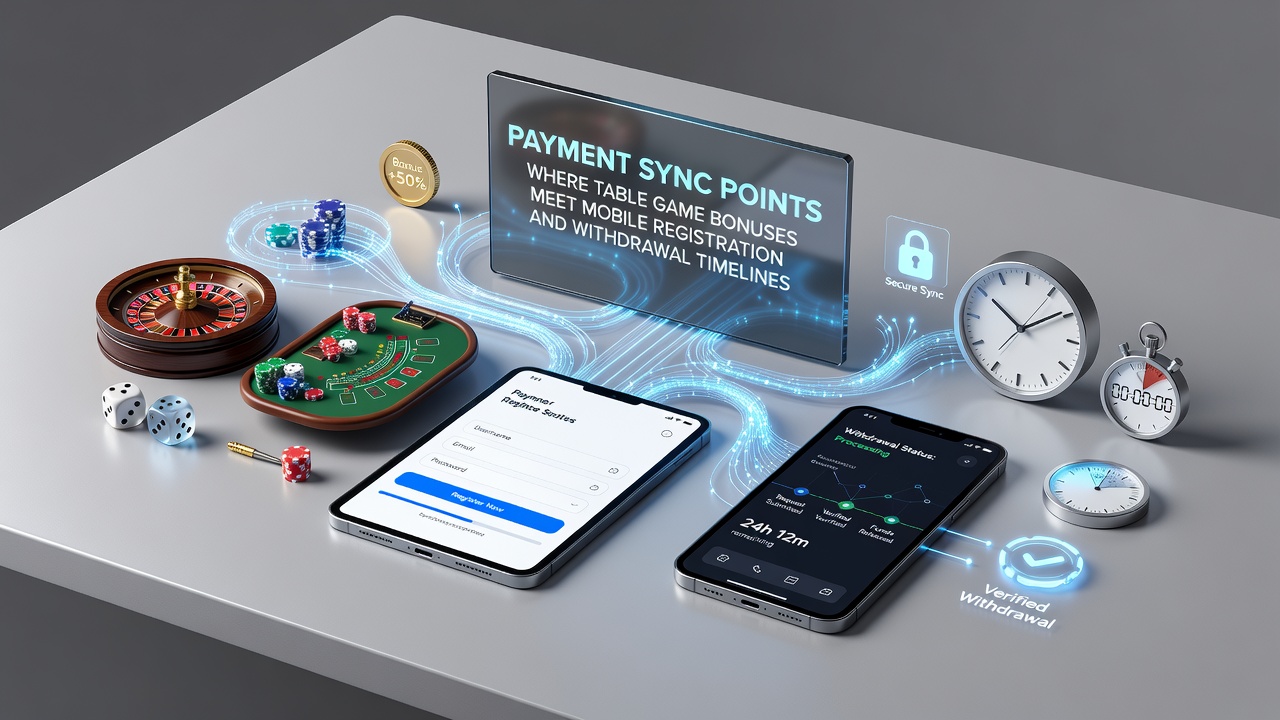
Table Game Bonus Integration Across Mobile Platforms and Payment Timelines
Table game bonuses align with mobile registration sequences through specific payment checkpoints that determine when rewards activate and when funds become available for withdrawal. Operators structure these sync points so that account creation, initial deposits, bonus credits, and wagering completion all connect to the same transaction ledger. Data from industry reports indicate that registration typically triggers an immediate deposit window where table game bonuses such as blackjack match credits or roulette cashback offers load automatically once the first payment clears.
Registration Triggers and Initial Deposit Coordination
Mobile platforms require users to complete identity verification before bonus funds appear in the account balance, and this step often coincides with the first deposit that funds table game play. Payment processors handle the deposit within seconds on most systems, yet the bonus itself posts only after the transaction status updates to confirmed. Observers note that delays at this stage usually stem from banking partner processing rather than the casino software itself. Research from the Nevada Gaming Control Board shows that average deposit confirmation times range between 30 seconds and three minutes for major card networks during peak hours.
Once the deposit registers, the system allocates the table game bonus according to predefined rules that specify eligible games and minimum stake amounts. Blackjack, baccarat, and poker variants frequently carry different contribution rates toward wagering requirements compared with slot machines, which affects how quickly players reach payout eligibility. Those who study mobile gaming flows point out that the bonus ledger updates in real time as wagers resolve, allowing users to track remaining playthrough directly in the account dashboard.
Bonus Wagering Paths and Withdrawal Timelines
Withdrawal requests queue only after the full wagering requirement on table game bonuses reaches completion, and this checkpoint creates the primary sync point between bonus mechanics and cash-out schedules. Systems calculate contribution automatically by multiplying stake amounts by the game-specific percentage, then subtract that figure from the total requirement. A single completed hand of blackjack at a qualifying table therefore advances the meter differently than an equivalent bet on a slot reel.
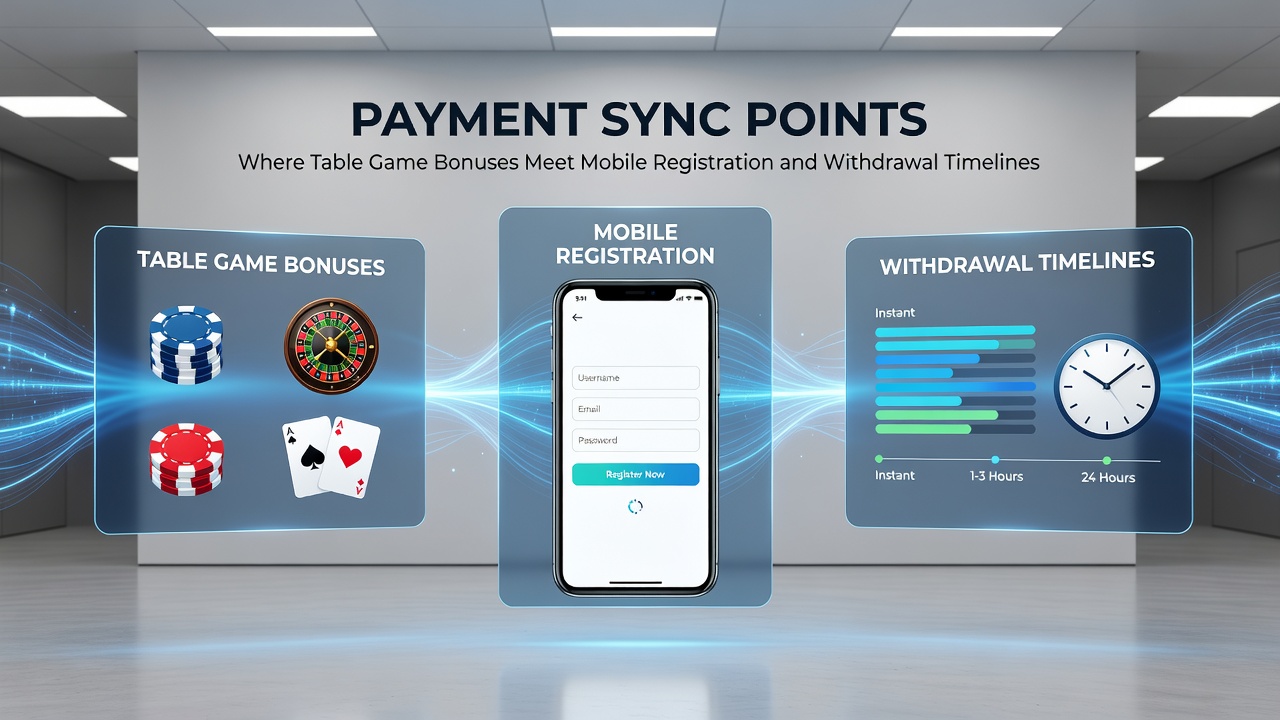
Payment processors release approved withdrawals according to method-specific schedules that operators publish in their terms. E-wallet transfers often finalize within 24 hours once the bonus condition clears, whereas bank transfers may require additional verification windows that extend to several business days. Figures from the Australian Communications and Media Authority reveal that median withdrawal processing times across regulated platforms shortened by 18 percent between 2024 and 2026 as automated compliance checks became standard.
October 2026 Platform Updates and Cross-Game Compatibility
Platform updates rolled out in October 2026 introduced unified bonus ledgers that track table game progress alongside live dealer sessions without requiring separate accounts. These changes reduced friction at the registration-to-withdrawal pipeline because a single verification event now satisfies both bonus activation and payout approval criteria. Developers integrated real-time API calls between payment gateways and game servers so that any completed wager instantly reflects in the remaining requirement total.
Operators that adopted the new framework reported fewer support tickets related to bonus disputes because players could view exact contribution percentages before placing bets. Studies conducted by the University of Nevada, Reno gaming research group found that platforms using synchronized ledgers experienced a 22 percent drop in pending withdrawal holds caused by unmet table game conditions during the first quarter after implementation.
Security Layers and Compliance Checkpoints
Every payment sync point includes automated fraud detection that cross-references device fingerprints, IP history, and transaction patterns before releasing bonus funds or approving withdrawals. These layers activate at registration, at deposit confirmation, and again at the final cash-out request. Regulatory bodies in multiple jurisdictions require operators to maintain audit logs of each checkpoint so that disputes can be resolved with timestamped data rather than manual review.
Users who complete registration and deposit during the same session benefit from accelerated bonus loading because the system processes identity verification and payment authorization in parallel rather than sequentially. This parallel processing shortens the interval between account creation and first eligible table game round while preserving the same compliance standards applied to later withdrawals.
Conclusion
Payment sync points create predictable pathways that connect mobile registration, table game bonus allocation, wagering completion, and withdrawal authorization into a single operational sequence. Data collected across multiple markets demonstrate that platforms maintaining clear checkpoint documentation reduce processing delays and improve user retention at each stage of the flow. Continued refinement of these integration points supports faster, more transparent movement of funds while satisfying security and regulatory requirements.